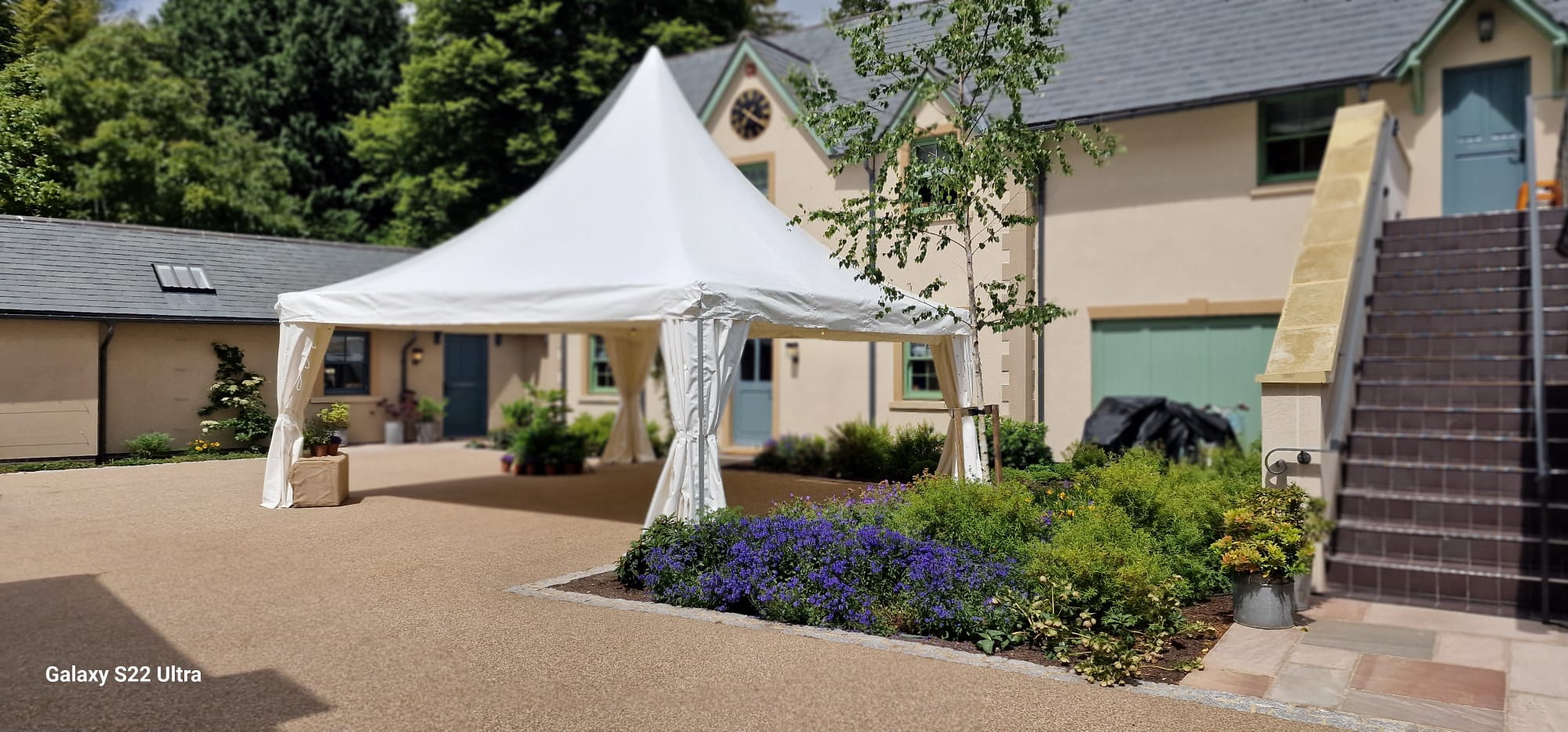
# Pagoda Marquee Hire
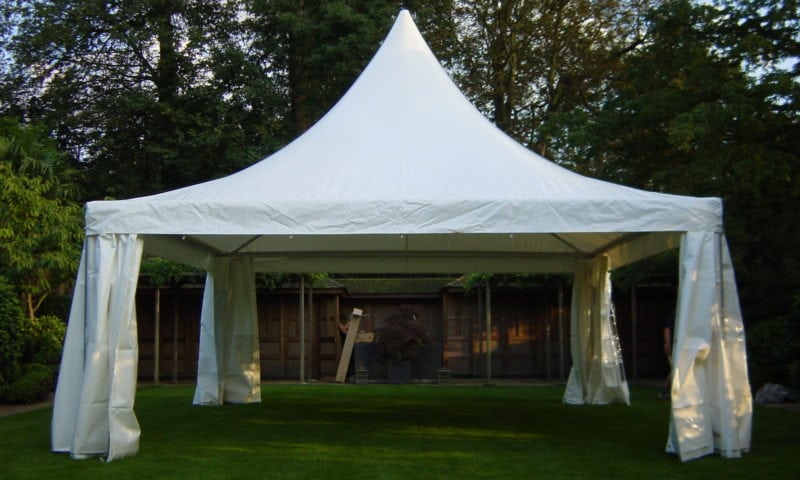
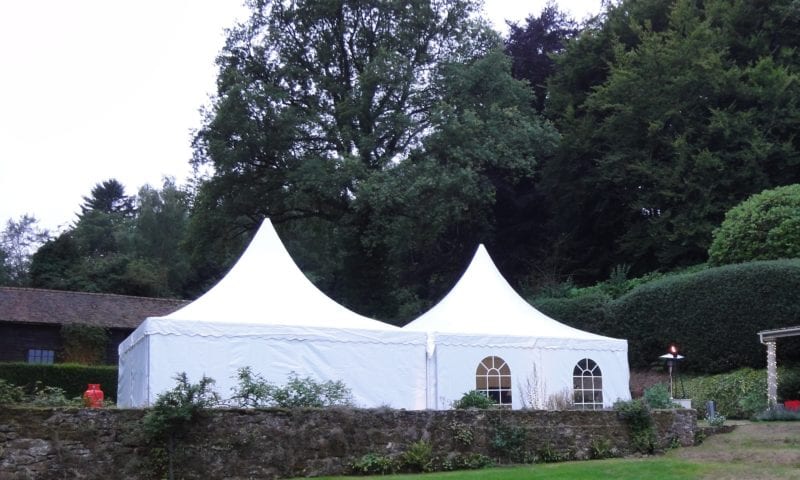
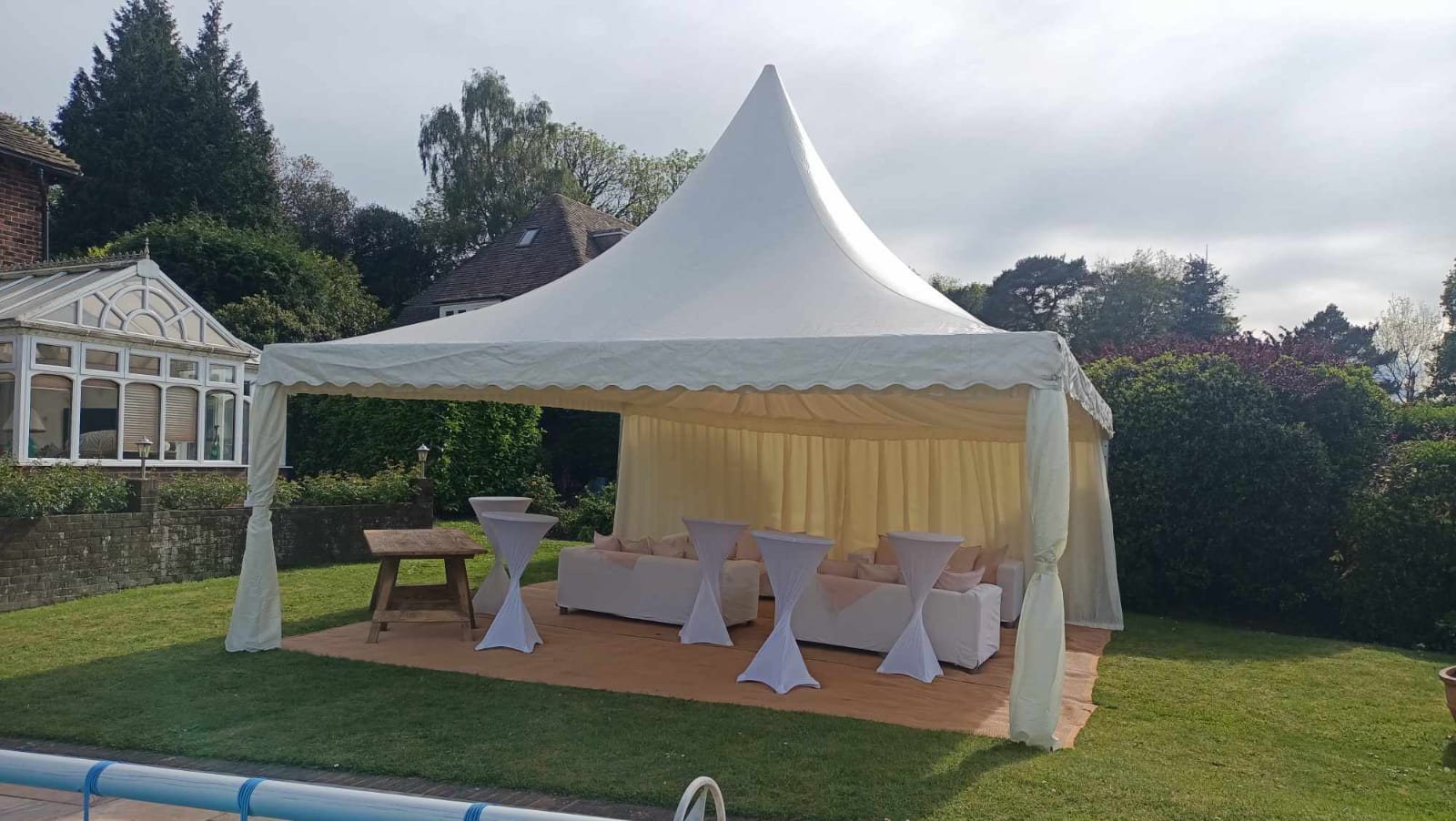
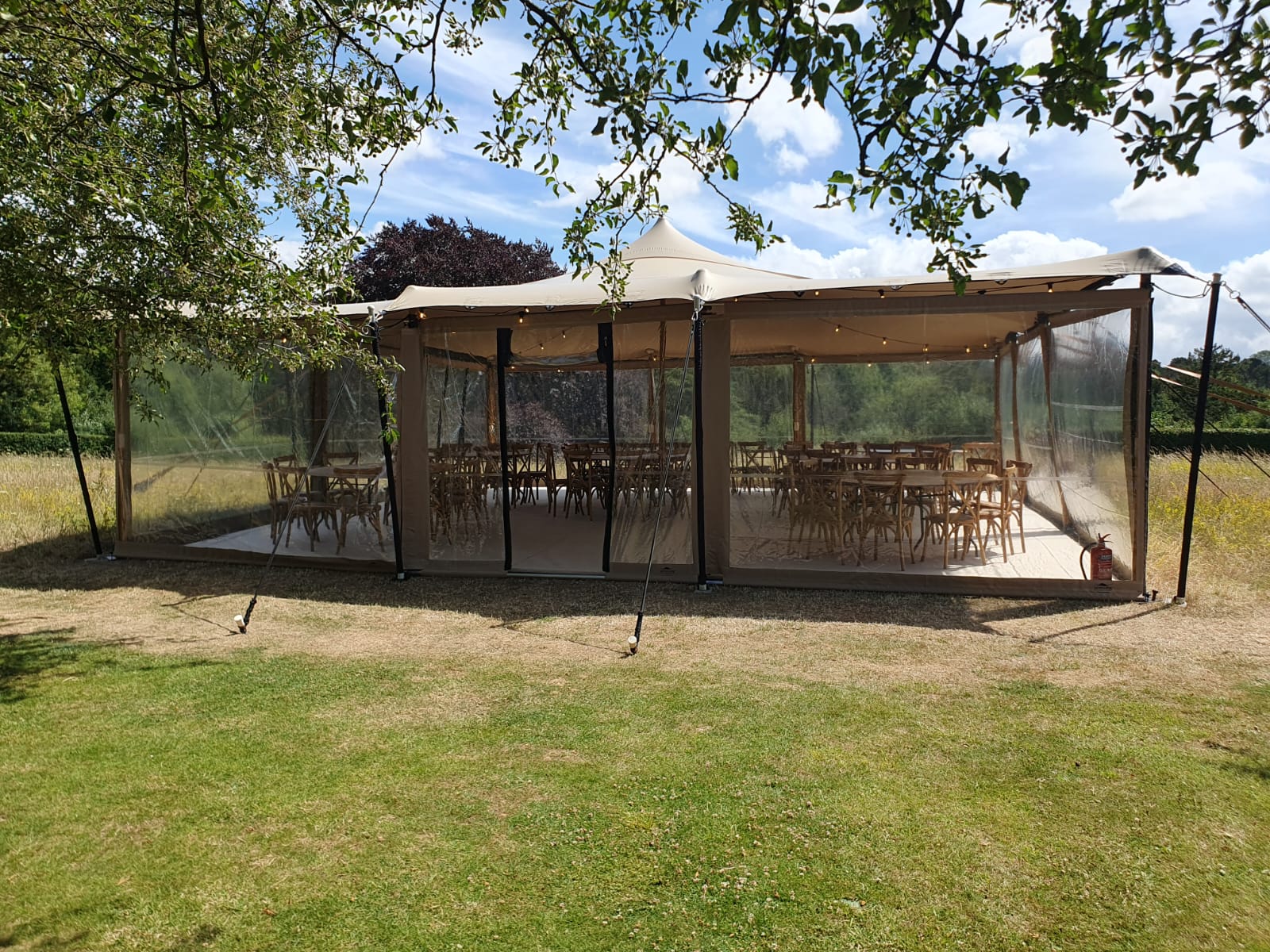
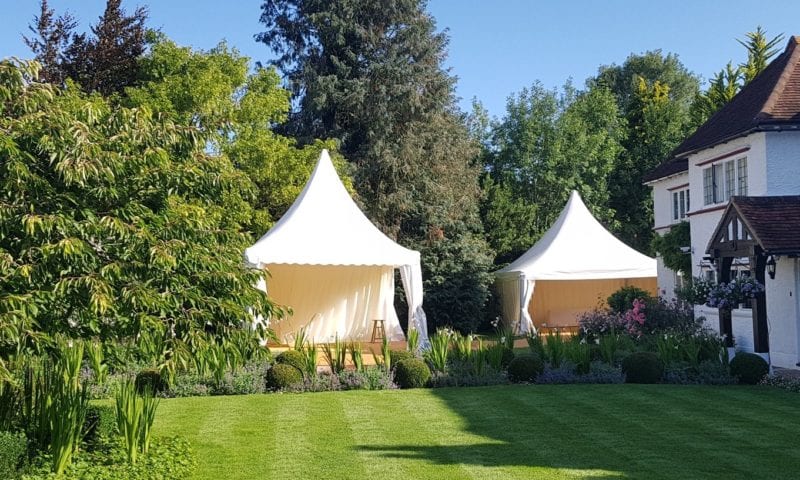
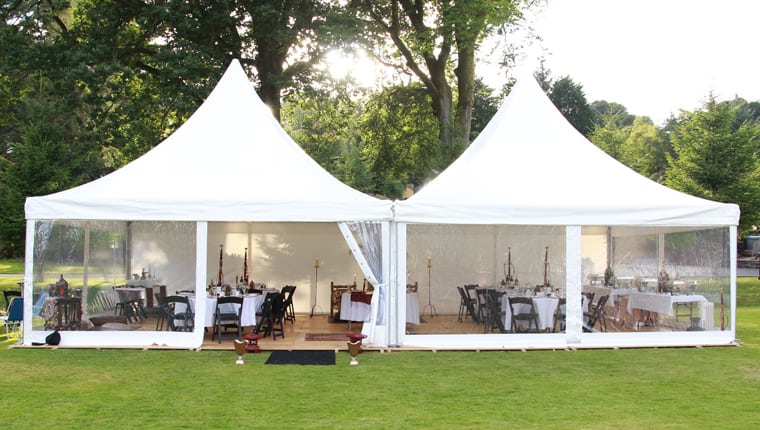
A pagoda is a modular structure built in individual bays, each with a distinctive peaked roof. A single unit is compact and considered in its proportions. Several linked together create a covered space with a profile that reads quite differently from a traditional canvas structure or a plain rectangular frame — and that difference is often exactly what the occasion calls for.
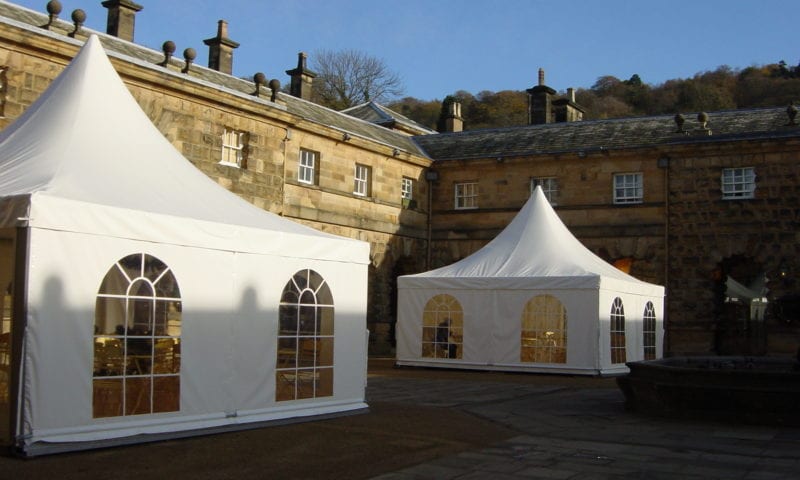
Pagodas are well suited to sites where a full-scale clear-span structure would be too large, or where the shape of the available ground makes a standard rectangular footprint impractical. Because the units have no guy ropes, the footprint corresponds closely to the covered area — a significant practical advantage on constrained or irregular sites. They are also well used as part of a larger setup: a covered entrance, a secondary bar or reception space, a link between separate areas of a venue.
Who it's for
Pagoda marquees are a considered choice for:
- Smaller weddings and garden parties where the scale and profile of the structure suit the setting better than a larger frame would
- Corporate events where the distinctive peaked exterior adds to the aesthetic of the occasion
- Restricted or irregular sites where the modular approach makes placement straightforward
- Secondary or connecting structures — a covered entrance, a bar bay, or a catering connection alongside a main marquee
- Events where the exterior character matters — the peaked roof and clean lines have a visual quality that a plain rectangular structure does not
Sizes and configurations
Pagoda units come in 3m, 4m, 5m and 6m bays, and can be arranged as standalone structures or linked in any practical combination:
| Configuration | Internal area (approx) | Seated dinner (approx) | Standing (approx) |
|---|---|---|---|
| 1 × 4m bay | 16m² | 10–12 | 20 |
| 2 × 5m linked | 50m² | 35–40 | 60 |
| 4 × 5m linked | 100m² | 70–80 | 120 |
| 2 × 6m linked | 72m² | 50–60 | 90 |
| 4 × 6m linked | 144m² | 100–120 | 180 |
Capacities are approximate and depend on layout and equipment. Linked configurations can be arranged in a row, an L-shape, or a T, depending on what the site allows.
Pricing
Pagoda marquees are priced per bay, with linked configurations quoted as a package. As a guide:
- A single bay for a weekend event starts from £[X]
- A four-bay linked setup for a wedding or corporate event (five-day hire, lining and flooring included) typically falls in the range £[X]–£[X]
Furniture, lighting, and catering equipment are itemised separately. The quote is fixed at the start of the process.
Frequently asked questions
Can pagoda bays connect to other structure types?
In some configurations, yes. A single pagoda unit is often used as a covered entrance or as a connection between a main marquee and a secondary space — a bar, a cloakroom, or a catering station. We have used this approach on a number of sites across Sussex and Surrey. If you have a specific layout in mind, describe it and we will confirm whether it is feasible on your site.
What is the difference between a pagoda and a clear-span marquee?
A clear-span structure is a single aluminium frame — no internal poles, suited to larger events that need a clean, uninterrupted interior. A pagoda is modular and smaller in its individual units, with a more distinctive exterior profile. For a large wedding, a clear-span will typically be more practical and more cost-effective. For a smaller event, or one where the visual character of the structure is part of the brief, a pagoda is worth considering.
How is the interior finished?
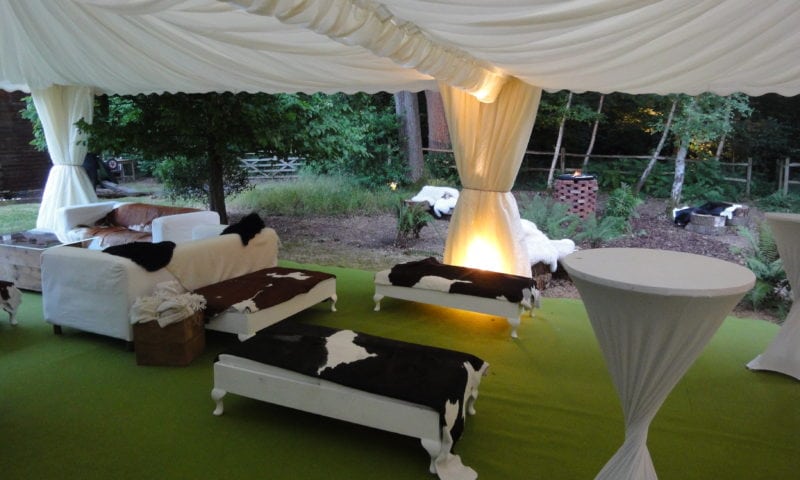
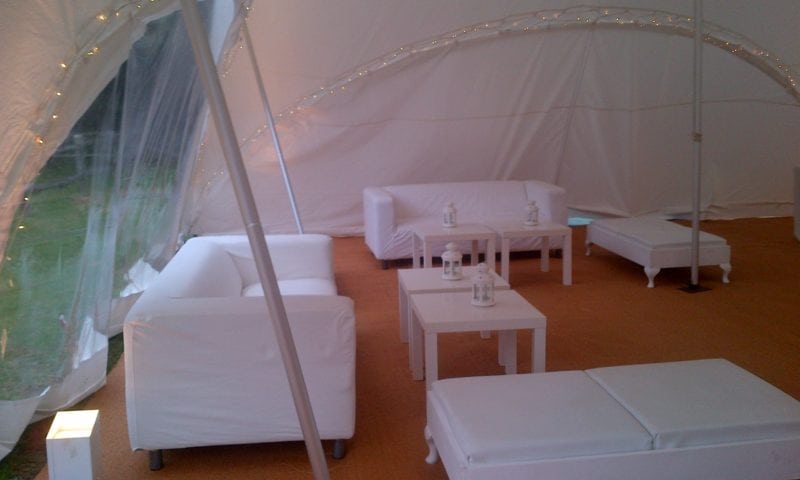
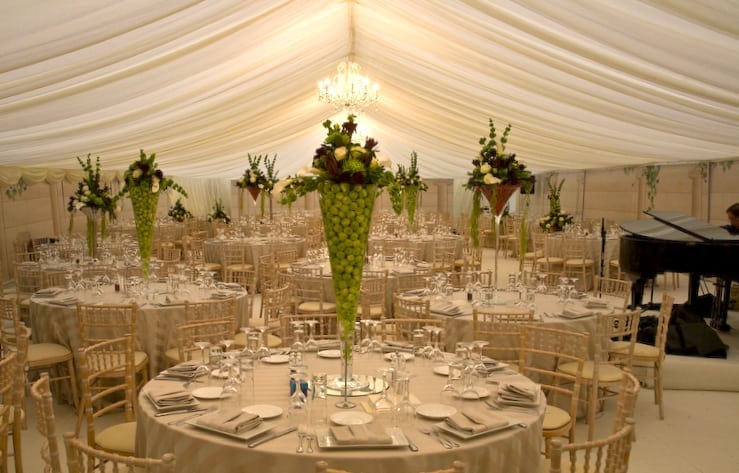
Each bay can be lined in the same way as a traditional marquee — draped fabric ceiling, sidewall panels, and a choice of flooring. The peaked ceiling of each unit creates a slightly different interior quality from a flat-roofed clear-span structure; lighting placed at the peak can be particularly effective for evening events.
Related marquee types
- Clear-span marquee — the practical choice for larger events requiring a column-free interior at scale
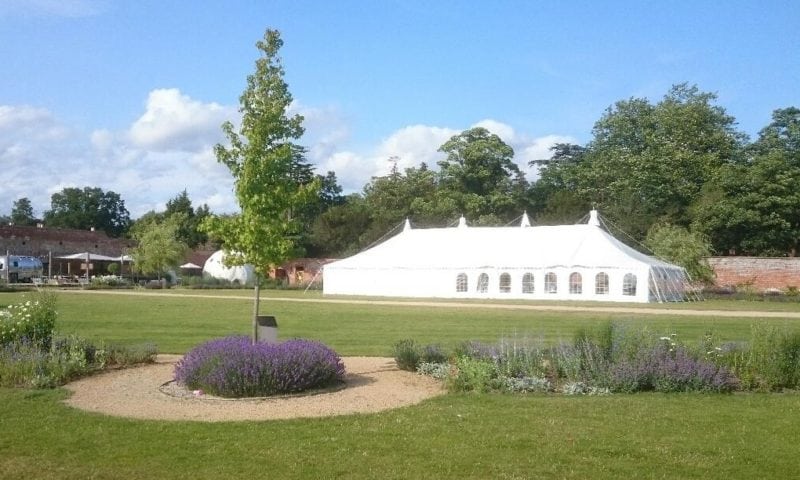
- Traditional pole marquee — comparable in scale and character; particularly suited to garden settings
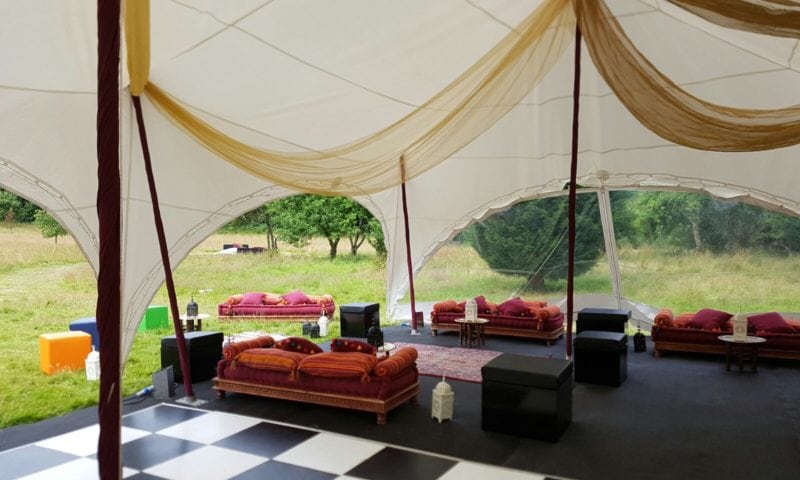
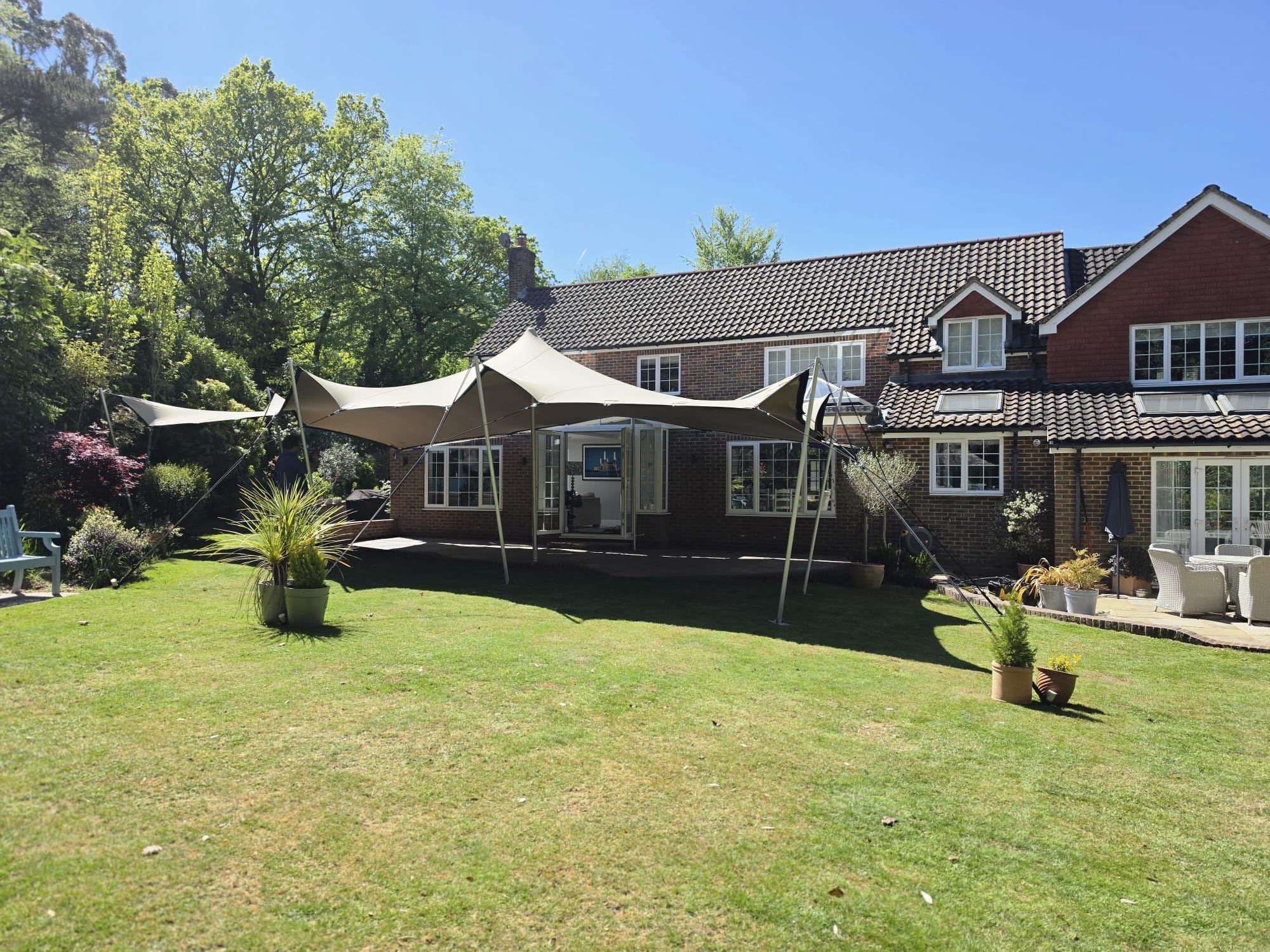
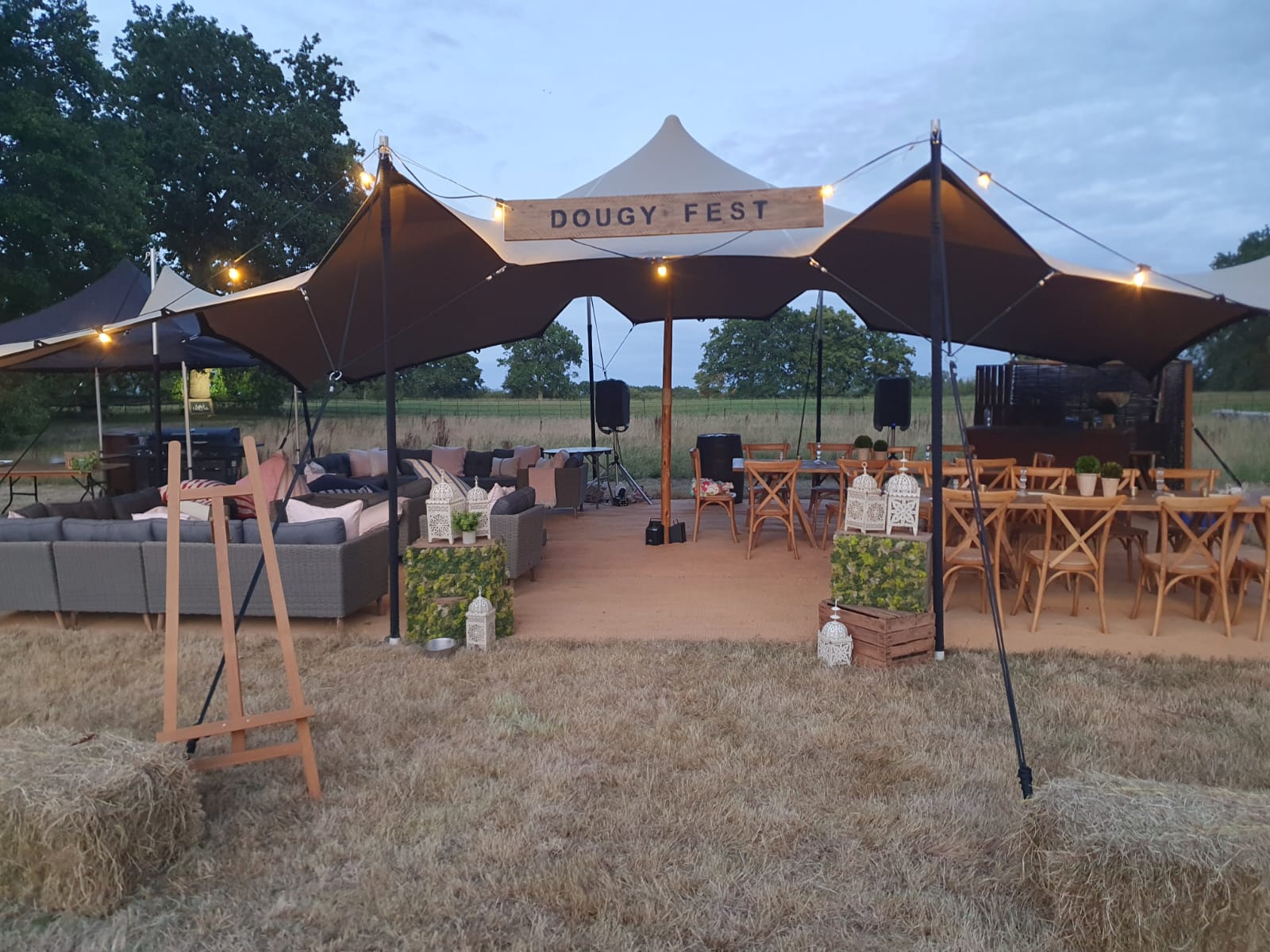
- Stretch tent — another structure where the form itself contributes to the occasion
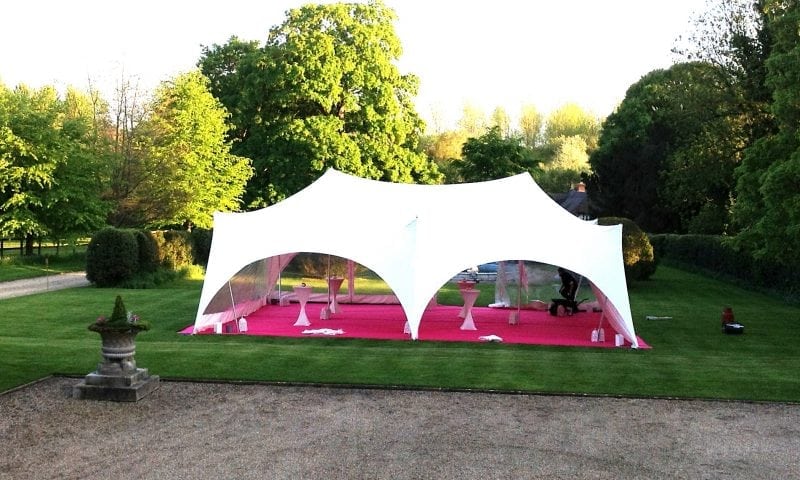
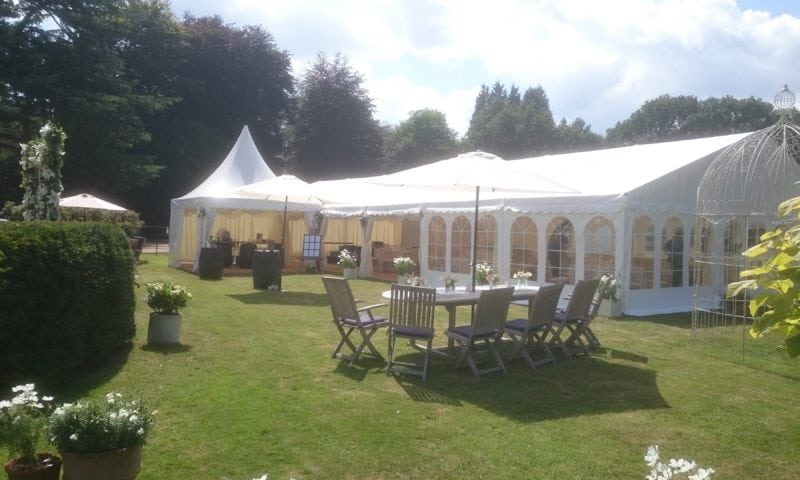
Gallery: pagoda marquees at events across Sussex and Surrey. View the gallery →